The story.
A shortened timeline of my father’s wrongful conviction and our family’s journey — shared from my perspective as his daughter.
Some legal details have been condensed, but the truth of our experience remains.
The Story.
-

The Night That Changed Everything.
I was just a little girl when my dad’s life — and mine — changed forever.
We were living in a small town in Massachusetts when this tragedy happened. A three-year-old boy named Christopher, the son of my dad’s girlfriend at the time, suddenly became very sick while at my dad’s house.
My dad said he found the boy throwing up and hitting his head on the floor. He panicked and tried everything — cleaning out his mouth, splashing water on his face, trying CPR — before rushing him, his girlfriend, and her daughter to the fire station for help.
The firefighters did everything they could, but it was too late. Christopher didn’t make it. He was only three years old.
Within hours, everything turned upside down. My dad stayed to answer questions, but the story quickly got twisted. Reporters showed up. Headlines called him a “baby killer.” Overnight, the man who tried to save a child became the one accused of taking his life.
Within days, my dad was arrested for first-degree murder.
He had no criminal record. He wasn’t violent. He was a hardworking man — someone who built things with his hands and took care of the people he loved. But once the accusations started, none of that mattered.
The state decided he must have “lost his temper.” They called it abuse. They called it murder. And just like that, his truth — our truth — stopped mattering.
-
The Trial That Stole Everything.
After the autopsy came back, the police called Ami (the girlfriend) back in to talk again — and that’s when everything started to fall apart. Under pressure, she changed her story multiple times. The detectives told her it was either my dad or her, and after being shown disturbing photos and pushed for hours, she finally said it must have been him. She told them my dad had gone downstairs alone and that she’d heard banging noises “like someone punching a wall.” When they asked what she thought happened, she said, “It had to be the wall.”
That was all they needed.
Two days after Christopher died, my dad — the same man who had rushed that little boy to the fire station begging for help — was arrested for first-degree murder.
The news spread like wildfire. His face was everywhere — on TV, in newspapers, across our small town. They called him a “baby killer.” They said he had beaten a child to death over wet pants. It didn’t matter that there was no proof, no real evidence. People believed what they read, and overnight, my dad became the villain in a story that wasn’t true.
He didn’t know anything about courtrooms or lawyers. The state gave him a public defender who barely met with him. That lawyer told my dad to plead guilty — said it would be “easier.” But my dad refused. Through tears, he told him, “I’m not pleading guilty to something I didn’t do.” Then he fired him.
My family scraped together whatever they could to hire a new lawyer, but he only had a few weeks to prepare. Even he admitted the odds were bad.
When the trial began, the state painted a picture of my dad as an angry man who “lost his temper.” They brought in doctors and experts who talked about bruises and rage and made everything fit their story. Ami took the stand and changed her story again. By then, it didn’t matter — the jury already had their minds made up.
My dad took the stand, desperate to tell the truth. When they asked who had hurt Christopher, he said the only thing he could:
“I don’t know.”
The prosecutor ended by asking one final question — the one that sealed his fate:
“Who had the strength to do this — a small woman, or a 185-pound bouncer?”
It took the jury just 93 minutes to decide.
Guilty. -
When Hope Almost Disappeared.
By 2010, my dad had already spent 14 years in prison. He went in young and scared, with a learning disability and very little behind him — but he refused to give up. He earned his GED, took college classes, and helped other men learn to read and write. Helping others became how he survived.
For years, he carried the words that defined his life.
“They say I killed a baby.”
There were no recordings of any police interviews. Reports were written later. Statements were never signed. But once the story was told, none of that seemed to matter.
What breaks my heart is how the truth was shaped. After hours of interrogation and being shown graphic photos, the child’s mother was told it had to be my dad or her. When she finally broke, fear became fact.
Hope didn’t disappear all at once. It wore him down slowly.
“Hope isn’t solid,” he once told me. “It just fades.”
Then science began to change. Doctors admitted what they once denied — that short falls could be deadly, that bruises don’t tell time, that injuries blamed on abuse aren’t always abuse at all.
When my dad read about a national investigation exposing wrongful convictions tied to bad science, he stopped and said,
“That’s me.”
For the first time in years, the story that stole his life was being questioned. And in that small crack — that moment of truth — hope found its way back to him.
And it found its way back to me too.
-
When The Truth Started To Surface.
In 2011, my dad started asking for help. After years of being ignored, he sent his case to doctors who were finally willing to question the science that put him in prison.
One of them noticed something no one had taken seriously before — Christopher had “fallen down the stairs” days before he died while in the care of his mother. At trial, it was brushed off. They said a child couldn’t survive a head injury that long.
But they were wrong.
New science showed kids can live for days after a serious injury before suddenly getting worse. For the first time, the bruises and pain made sense.
Doctors spoke up. They said the science used against my dad was outdated and driven by emotion, not truth. For our family, it felt like hope.
Then it was taken away.
The same judge who sentenced my dad refused to hear it. The higher court agreed. Even with experts saying the case was wrong, no one wanted to look again.
Later, we learned more. Things the jury never knew. Warnings that were ignored. Truths that were buried.
Some people still believe the worst. I don’t blame them — they were told a story and never shown the whole picture.
My dad always tells me,
“The truth doesn’t go away. It just waits.”And as his daughter, I’m still waiting with him — believing that one day, someone will finally listen.
-

The Spark That Never Went Out.
Years later, a new attorney took my dad’s case. She didn’t just see paperwork — she saw him. For the first time in a long time, someone believed him without hesitation.
As she looked through the old files, she found things that should have changed everything. Records that were never shown to the jury. Evidence that didn’t match the story told in court. Science that proved the timeline was wrong. The truth had been there all along — just buried.
My dad has spent more than thirty years in prison for something he didn’t do. Thirty years of birthdays through glass. Thirty years of phone calls instead of hugs. Thirty years of being called a monster for trying to help.
He wasn’t a father figure to Christopher. He was just a man trying to do the right thing. When a woman he was dating said her heat was shut off in the middle of winter, he opened his home. That one act of kindness cost him his freedom.
My dad has survived things I’ll never fully know. Violence. Fear. Being labeled a “baby killer.” There are parts of his story he still can’t tell me.
And still, he refuses to lie to get out.
When people ask if he’d take a deal just to go home, he always says no.
“I didn’t do this,” he tells me. “I won’t say I did.”
He’s older now. Gray hair. Gentle eyes. The same dad I remember — just behind glass.
What breaks my heart is that he carries grief, not guilt. He wishes he had seen more. He wishes he could have protected those kids better. That’s the kind of man he is.
After all these years, we finally have a chance to be heard. It’s not freedom yet — but it’s hope.
And I’ll keep fighting for him for as long as it takes.
-
Where We Are Today.
Where We Are Today
After nearly thirty years of fighting to be heard, we are finally standing on the edge of something new — something that feels like hope.
For the first time, my dad’s case is in the hands of people who are truly listening. People who see what we have been saying all along — that the evidence never made sense, that the science used to convict him has changed, and that an innocent man has spent half his life behind bars for something he didn’t do.
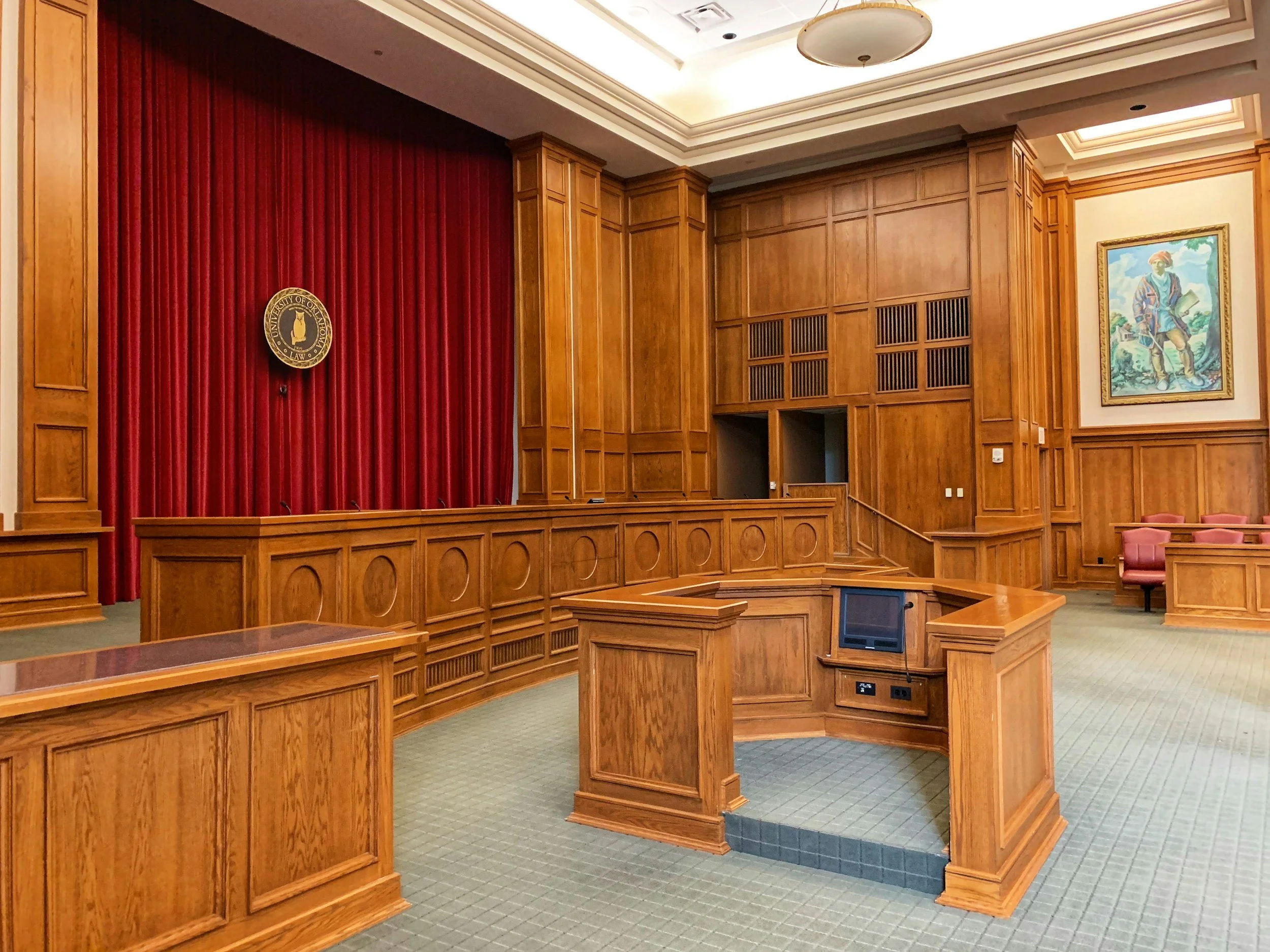
We took the biggest step yet. A motion for an evidentiary hearing was officially filed — and THE COURT GRANTED IT.
After decades of silence, dismissal, and closed doors, someone finally said, “Let’s look again.”
For our family, those words are everything. This hearing isn’t freedom — not yet — but it is a chance. A chance to bring the truth into the light. A chance to show the evidence that was ignored, the science that evolved without him, and the humanity that was lost in the rush to judgment.
My dad has waited almost thirty years for this moment. Thirty years of believing that one day the truth would surface. Thirty years of missed birthdays, holidays, and milestones — and still, somehow, holding on to faith when there was every reason not to.
I’ve learned not to take anything for granted when it comes to the justice system. But for the first time in a very long time, it feels like we are moving forward — not just surviving the story, but beginning to change it.
This fight has never been about just one man. It’s about every family that has been silenced, every person buried under false assumptions, and every innocent life still waiting for someone to finally listen.
We’re still here.
We’re still standing.
And we’re finally being heard.ONE DAY CLOSER
Amber